
How to Make Farts Not Smell: What Causes Fart Odor and How to Reduce It
Let’s get one thing out of the way: everybody farts.
Passing gas is a completely normal part of our human existence. The problem usually isn’t that gas exists.
The problem is when one innocent little toot smells like something crawled into the walls and died.
If you’ve ever wondered how to make farts not smell, why your gas sometimes smells much worse than usual, or whether it’s possible to reduce fart odor without somehow stopping your body from passing gas altogether, you’re in the right place.
The good news is that gas and gas odor are not the same thing.
Understanding that difference is the key to understanding why farts smell, and what you can do about it.
Why Do Farts Smell?
Most of the gas produced or swallowed by your body has very little odor.
Your digestive tract contains gases such as nitrogen, oxygen, carbon dioxide, hydrogen and methane. On their own, these aren't usually responsible for that unmistakable “someone definitely farted” smell.
The odor comes largely from small amounts of pungent compounds produced during digestion, particularly when bacteria in your intestines break down food.
Some of the best known odor-producing compounds contain sulfur.
One of them is hydrogen sulfide (H2S), which is famous for its rotten egg smell. Other compounds produced by intestinal bacteria can contribute additional sulfurous, cabbage like, rancid or otherwise unpleasant odors.
And it doesn't take much.
Even a relatively small concentration of these compounds can turn otherwise harmless toots into something capable of clearing a room.
That means the amount of gas you produce and how bad that gas smells are two different issues.
You can fart frequently without producing especially smelly gas.
Or you can barely pass any gas at all, but the little you do produce smells absolutely terrible.
That distinction matters when you're trying to find a solution.
Can You Make Farts Not Smell?
You may be able to significantly reduce fart odor, depending on what's causing it.
There are two basic approaches:
Reduce the production of odor-causing compounds in the first place, often through dietary or digestive changes.
Or:
Target the odor-causing compounds themselves.
The right strategy depends on your situation.
Someone whose gas suddenly became extremely smelly after changing their diet may benefit from identifying the food responsible.
Someone who gets particularly smelly gas after certain meals may decide those foods simply aren't worth it.
But what if the food isn't causing pain or another problem?
What if you really like the food?
And what if your primary complaint isn't gas itself it's simply that everyone in a 20 ft radius can smell it?
That's where odor control becomes a separate conversation from traditional gas relief.
1. Pay Attention to What You Eat
Food is one of the biggest variables affecting fart odor.
Your intestinal bacteria ferment different carbohydrates, fibers and other food components. What gets produced during that process varies depending on what you've eaten and the composition of your gut bacteria.
Foods commonly associated with stronger smelling gas include eggs, meat and other foods that contain sulfer; beans and certain high-fiber foods; broccoli, cauliflower, cabbage and other cruciferous vegetables; garlic and onions; dairy products for people who have difficulty digesting lactose; protein shakes or high-protein diets; and some artificial sweeteners and sugar alcohols.
That doesn't mean any of these foods are inherently “bad.”
Many are extremely nutritious.
It simply means that the digestive process can sometimes have… aromatic consequences.
If you've noticed a predictable pattern, keeping a simple food diary for a week or two can help.
Write down what you eat and when particularly smelly gas occurs.
You may discover that the “mystery” isn't much of a mystery after all.
2. Look for Specific Food Triggers
Some people find that one particular ingredient causes dramatically worse odor than everything else.
For one person, it may be eggs.
For someone else, dairy.
Another person may discover that a protein shake causes problems every single afternoon.
Others notice really smelly gas after eating onions, garlic, beans or certain sweeteners.
The useful question isn't simply: “What foods cause gas?”
It's: “What foods cause smelly gas for me?”
Those aren't necessarily the same thing.
A meal might increase how much you fart without making the odor particularly strong. Another food might barely increase the amount of gas but make what you do pass smell considerably worse.
If you can identify your personal trigger, you have several options: eat less of it, change when you eat it, try an alternative version, or plan ahead when you know you're going to eat it.
3. Eat More Slowly
Sometimes the simplest strategies help.
Eating quickly can cause you to swallow more air.
Drinking through straws, chewing gum, gulping beverages and talking while eating can also increase swallowed air.
That extra air can eventually make its way through your digestive system.
Reducing swallowed air won't necessarily eliminate odor-producing compounds, but it may reduce the overall amount of gas you're dealing with.
And sometimes less gas means fewer opportunities for an unfortunate social event.
4. Consider Whether a Food Is Difficult for You to Digest
Particularly smelly gas can sometimes occur when your body has difficulty digesting certain foods.
Lactose is a familiar example.
If lactose isn't fully digested in the small intestine, bacteria farther down the digestive tract get involved. Fermentation can produce gas along with other digestive symptoms.
Similar situations can occur with other carbohydrates and foods.
This is one reason why simply asking, “How do I stop my farts from smelling?” doesn't always have one universal answer.
Sometimes the odor is just an annoying consequence of digestion.
Other times it accompanies a digestive issue worth investigating.
If unwanted, smelly gas is persistent, suddenly changes without an obvious explanation, or occurs alongside symptoms such as significant abdominal pain, ongoing diarrhea, blood in your stool, unexplained weight loss or other concerning changes, talk with a qualified healthcare professional.
5. Don't Confuse Gas Relief With Gas Odor Control
This is probably the most important distinction in this entire article.
Many products marketed for gas are designed to help with gas production, pressure or bloating.
But that isn't necessarily the same as reducing odor.
Imagine someone saying:
“I don't really care that I fart. I just don't want anyone to know when I do.”
That's an entirely different goal.
Your digestive system is supposed to produce and release gas.
Trying to completely eliminate flatulence isn't particularly realistic, and in most situations isn't necessary.
For many people, the ideal outcome isn't:
Never fart again.
It's:
Fart normally without creating a biological emergency in the room.
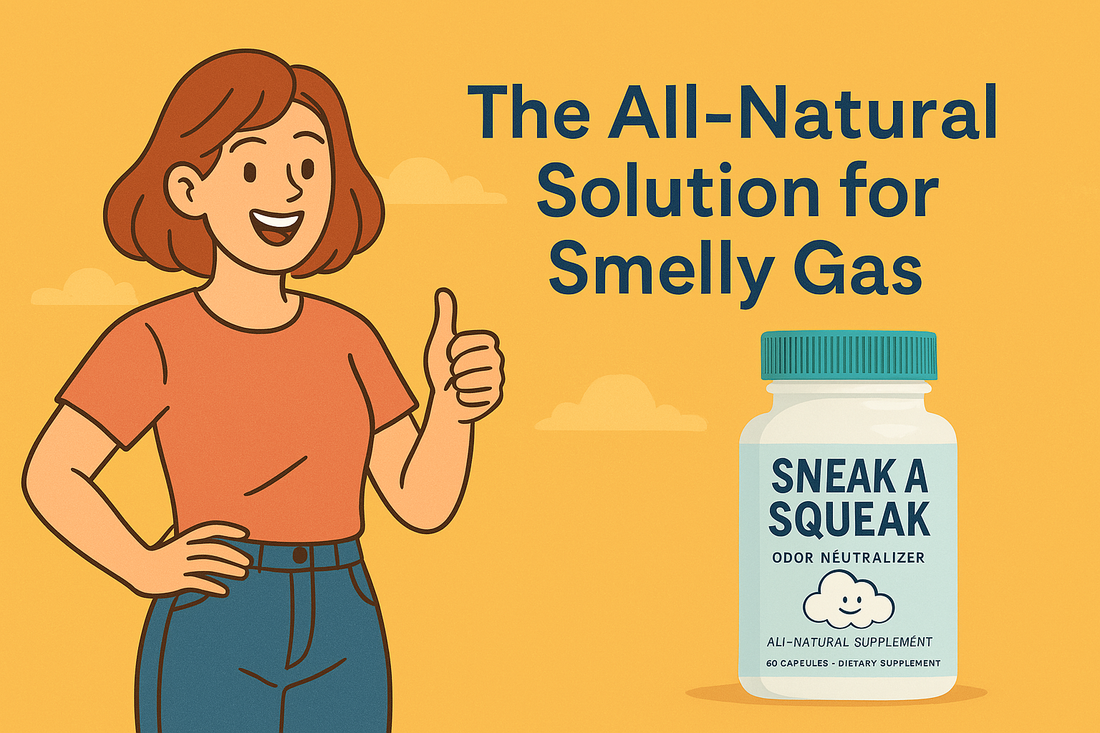
That is the idea behind odor-focused products such as Sneak a Squeak.
Sneak a Squeak is an all-natural supplement created specifically for people whose primary problem is smelly gas.
Rather than trying to stop normal digestion or prevent your body from producing gas, Sneak a Squeak is designed to help neutralize the compounds responsible for unpleasant flatulence odor.
In other words:
The fart can still happen. It just doesn't have to announce itself.
How Sneak a Squeak Works
Your intestines contain trillions of microorganisms involved in digestion.
As those bacteria break down food, they can produce odor-causing compounds.
Sneak a Squeak contains a combination of ingredients including activated charcoal, chlorella, yucca root powder and zinc that are used specifically with odor control in mind.
The basic idea is simple:
Instead of trying to shut down the natural digestive process that creates intestinal gas, Sneak a Squeak is designed to help deal with the smelly compounds contained within that gas.
That distinction is important.
Sneak a Squeak is not intended to stop your body from farting.
It is designed for something much more socially useful:
Making those farts a lot less noticeable.
A serving begins working in approximately two hours, with odor-control effects lasting up to 12 hours.
That makes it particularly useful when you know you'd rather not gamble on your digestive system behaving itself.
Think date nights.
Work meetings.
Airplane rides.
Road trips.
Movie theaters.
Parties.
Sharing a hotel room.
Spending the evening on someone's couch.
Or simply existing in your own house without your family accusing you of violating international law.
What About Sulfur-Smelling or Rotten-Egg Farts?
If your farts smell like rotten eggs, sulfur compounds may be contributing to the odor.
Hydrogen sulfide is especially well known for producing a rotten-egg smell.
Certain foods naturally contain sulfur, and intestinal bacteria can also create sulfur-containing compounds during digestion.
That doesn't mean you need to eliminate every sulfur-containing food from your diet.
Eggs, meat, cruciferous vegetables and many other foods associated with sulfur are normal parts of a healthy diet for many people.
If a particular food consistently causes problems, however, adjusting the amount you eat may help.
And if you'd rather keep eating Grandma's deviled eggs without turning Thanksgiving into an evacuation drill, odor control offers another approach.
Why Do Some People's Farts Smell Worse Than Others?
Because everyone's digestive system is different.
Your diet matters.
Your gut bacteria matter.
How efficiently you digest certain foods matters.
Your bowel habits matter.
Even changes in what you've eaten over the previous day or two can affect what's happening inside your intestinal tract.
That's why two people can eat the exact same meal and experience completely different results afterward.
One person walks away without incident.
The other should probably stay away from open flames.
There isn't necessarily anything unusual about that variation.
Why Does Fart Smell Sometimes Linger?
Unfortunately, some odor-producing compounds are detectable by the human nose at extremely low concentrations.
Once released into an enclosed room, they can remain noticeable even after the original gas has dispersed.
Poor ventilation makes the situation worse.
Cars, offices, bedrooms, airplanes and other enclosed spaces are especially unforgiving.
You can certainly open a window, turn on a fan, use an air purifier or deploy enough air freshener to make the room smell like an artificial lavender factory.
But those solutions deal with the smell after it has already escaped.
Reducing the odor before the gas is released takes a different approach.
What If My Gas Only Smells Occasionally?
That's extremely common.
And it's also why odor control doesn't necessarily have to be something you use every day.
Maybe you're usually fine but know pizza causes problems.
Maybe it's protein-shake day.
Maybe you're going on a road trip.
Maybe you've got a date.
Maybe you're spending four hours trapped in an airplane seat six inches away from strangers who did nothing to deserve what your digestive system has planned.
Sneak a Squeak can be used when needed rather than becoming another complicated daily ritual.
And if smelly gas is something you deal with regularly, it can also be used more consistently according to the product directions.
Should You Hold In a Fart Because It Smells?
Anyone who has experienced embarrassing gas has considered it.
You're sitting in a meeting.
Your stomach gives you the warning.
You know what's coming.
You also know there are eight people sitting within smelling distance.
So you clench every muscle you've got and start bargaining with the universe.
But constantly worrying about whether you're going to smell is hardly an ideal solution.
Passing gas is normal.
The embarrassment comes primarily from everyone else knowing you did it.
That's why people are looking for ways to make their farts not smell.
If you can address the smell rather than constantly fighting your body's normal digestive processes, the entire social equation changes.
You can sit on the couch next to your spouse.
Stay in the car instead of cracking every window in January.
Finish the meeting.
Enjoy the date.
Keep watching the movie.
And nobody has to know what just happened.
Which, frankly, is how farting should work.
How to Make Farts Smell Less: The Bottom Line
If you're trying to figure out how to make farts not smell, start by recognizing that gas production and gas odor are separate problems.
Changing your diet, identifying food triggers, eating more slowly and addressing foods you don't digest well can sometimes make a major difference.
But if your digestive system is otherwise doing exactly what it's supposed to do and your main complaint is simply:
“My farts smell terrible.”
Then trying to eliminate gas altogether may be solving the wrong problem.
Sometimes you don't need to stop the fart.
You just need to take the stink out of it.
That's exactly why Sneak a Squeak exists.
Sneak a Squeak is an all-natural, made-in-the-USA supplement designed to help neutralize embarrassing flatulence odor without trying to stop the normal digestive process that produces gas.
One serving starts working in about two hours and can provide odor control for up to 12 hours.
So whether you're dealing with date-night nerves, office-chair roulette, road-trip danger or simply a spouse who's threatened to make you sleep in another room, there's finally another option.
Keep the fart. Lose the evidence.
Learn more about Sneak a Squeak at SneakASqueak.com.
Frequently Asked Questions About Smelly Gas
How can I make my farts not smell?
Reducing foods that trigger particularly strong odor, identifying digestive intolerances and addressing the odor-producing compounds themselves can all help. Because gas production and gas odor are separate issues, someone whose main problem is smell may want to focus specifically on odor control rather than trying to eliminate flatulence entirely.
Why do my farts smell so bad?
Strong fart odor usually results from compounds produced during digestion, particularly compounds created by intestinal bacteria as they break down food. Diet, gut bacteria and individual differences in digestion can all influence how strong the odor becomes.
Why do my farts smell like rotten eggs?
A rotten-egg smell is commonly associated with sulfur-containing compounds such as hydrogen sulfide. Certain foods and the way intestinal bacteria process them can increase sulfurous odors.
What foods cause smelly farts?
Common culprits can include eggs, meat, beans, cruciferous vegetables, garlic, onions, dairy for people who have difficulty digesting lactose, certain protein products and some artificial sweeteners. Your individual triggers may differ.
Can you stop fart odor without stopping gas?
That's the goal of odor-focused approaches. Your digestive system naturally produces gas, so eliminating flatulence altogether isn't necessary for most people. Products designed specifically around flatulence odor focus on the compounds that create the smell rather than attempting to stop the digestive process itself.
Does Sneak a Squeak stop you from farting?
No. Sneak a Squeak is not designed to stop normal gas production. It is specifically designed to help reduce the unpleasant odor associated with flatulence.
How long does Sneak a Squeak take to work?
Sneak a Squeak begins working in approximately two hours, with odor-control effects lasting up to 12 hours.
When should I talk to a doctor about unusually smelly gas?
Occasional smelly gas is common. Consider speaking with a healthcare professional if you experience a significant or unexplained change in your digestive symptoms, particularly when foul-smelling gas occurs alongside persistent abdominal pain, diarrhea, blood in your stool, unexplained weight loss or other concerning symptoms.